
Project TUBERS & RIMA Alliance: Main Challenges in Inspection & Maintenance Robotics
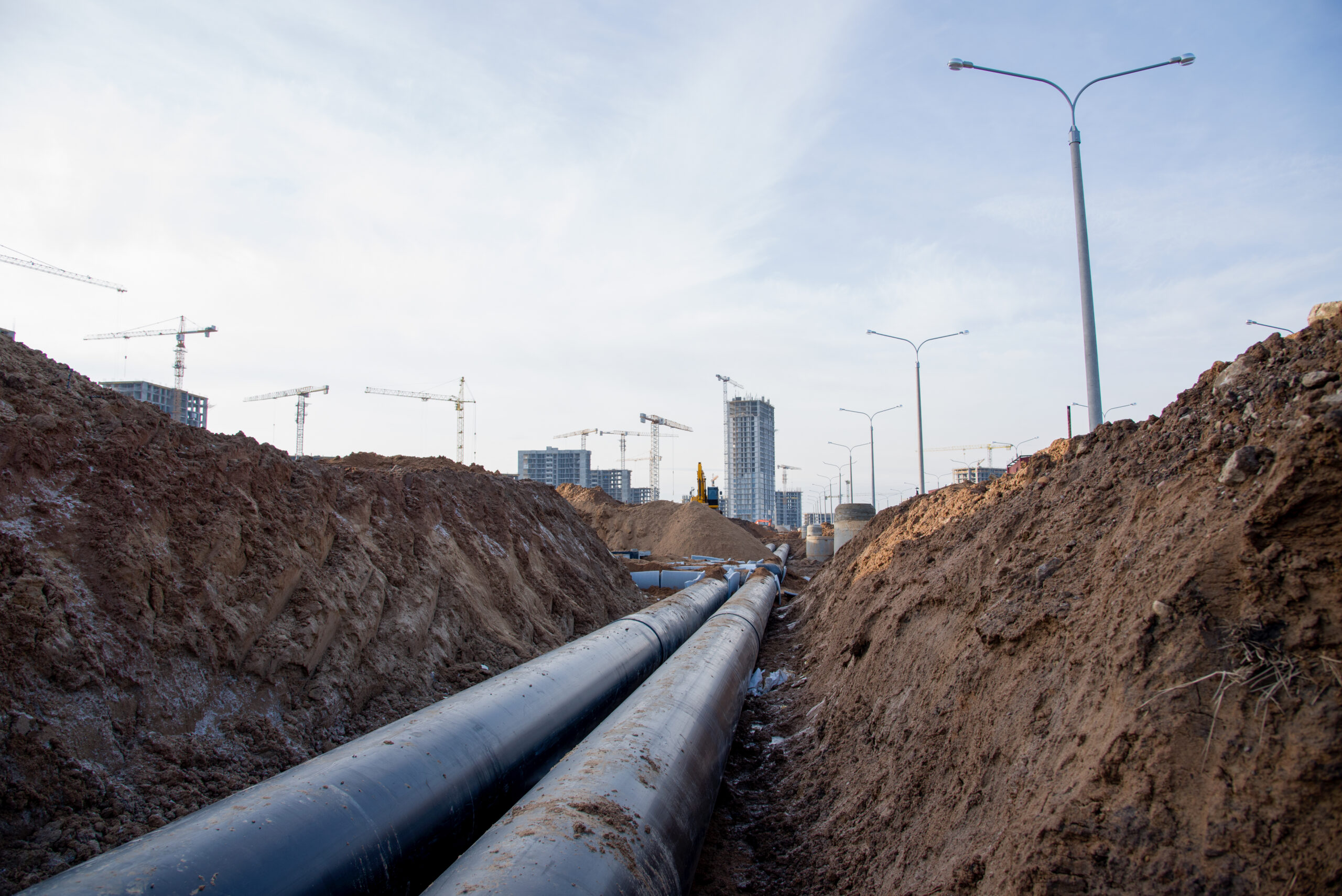
Since its initiation, our TUBERS project has sought to develop a system of robotic technologies that will inspect, monitor, and repair micro-leaks in drinking water pipe distribution networks. Therefore, establishing a stronger connection with the RIMA (Robotics for Inspection and Maintenance) Alliance has been a priority due to its extensive experience in robotics in numerous fields like civil engineering, infrastructure, water supply and energy, amongst others.
To further develop our connection with RIMA Alliance, its Digital Innovation Hubs and industrial organisations, we have conducted a very interesting conversation on the challenges in inspection and maintenance Robotics with Ladislav Vargovčík, the Director of Prototyping and Innovation Centre at TUKE and Aksel A. Transeth, a senior scientist at SINTEF Digital.
During the discussion, the RIMA Open Calls have been discussed from the document focusing on the Inspection and Maintenance challenges, the interviews with companies in the chemical and gas sector, Digital Innovation Hub members, as well as the different working groups focusing on nuclear energy, transportation and other industries. This way, the best use cases are to be identified to support the development and deployment of robotics I&M applications with grants.
Then, we asked our esteemed guests how they have been approaching specific situations in the field of Inspection and Maintenance.
How do you identify and select interesting inspection and maintenance use cases in industries as diverse as Oil and Gas, Power and utilities, and Public Infrastructure?
Ladislav Vargovčík: The solution to employ a robot that moves within the tubes is practical and has many advantages, like protecting the environment against spreading radiation and external contamination, especially in the case of nuclear systems since the robot is inside the tube.
Aksel A. Transeth: There has always been much interest, even looking ten years into the past, in finding suitable use cases or coming up with interesting ones in the supply industry and from the side of the asset owners. Throughout the years, there has been difficulty in identifying use cases that are possible to materialise as well as cost-effective to be purchased, adopted and implemented in the fitting industries.
How do you engage with the asset owners and their contractors to ensure that you fully understand the problem that needs to be solved instead of demonstrating how cool your robot looks? For visual inspection topics, if you don’t investigate the details in depth, you won’t realise that some or most of the surfaces/areas of interest require cleaning before visual inspection. Therefore, your robotic solution also needs to be able to perform cleaning operations effectively with the appropriate tools.
Aksel A. Transeth: The first critical step is to gather information through pictures, videos and interviews with the field experts since they are the ones who fully understand the problem at hand. For research organisations, the trick is to avoid getting trapped in the research part of the problem when discussing with the asset owners. They do not come in direct contact with the situation, so they do not know all the intricacies of the problem to be resolved. Additionally, posing questions about the surrounding environment and activities is quite essential to comprehend the different services needed. For example, in order to inspect a tank within a tank, the issues of cleaning and repairing and the factor of human involvement may also come into the picture.
Ladislav Vargovčík: There should be a convergence of opinions and ideas as well as the availability of the necessary input data in order to come to an agreement between the asset owners, field experts and us for the project to move forth.
How do you collect the input data and define the starting assumptions regarding the operating conditions your robotic process will face? For example, in many NDT corrosion inspection processes, relevant structured data are absent, which means that for your AI support system to spot defects, extra effort in training will be required.
Aksel A. Transeth: We try to get pieces of the infrastructure or actual equipment. So, for example, if you are working with a tank, we ask to have a part of a tank in our lab. Additionally, we have built a test plate with different sizes of damage in order to ask the client if what we have been working on has been representative of the respective conditions to understand the effectiveness of the sensors.
Ladislav Vargovčík: Regarding reproducing a nuclear area, obtaining knowledge about the problem as fast as possible and being on the same page with the asset owners is vital. At the same time, tests should be conducted in order to know if certain technologies are working.
How open to changes are asset owners to facilitate the performance of a robotic application? For example, there are different types of materials in the water pipe distribution systems in the water management industry. Not all of them are suitable for maintenance or repair by robotic systems due to their age and/or fragility.
Aksel A. Transeth: These kinds of issues may come up, and we call them “surprises”. Typically, we would experiment with equipment and materials we bought to create a mock-up system. However, in actual conditions, that equipment and materials may even be 30 years old, so they cannot be dismantled or are fragmented due to their rustiness. Therefore, the robot may not be able to work with them, and adjustments to the equipment should be made.
Ladislav Vargovčík: Some asset owners are concerned about adding new infrastructure (parts, materials, equipment) since they may require additional maintenance. Some of them are costly (adding cables or radio beacons) or require further human involvement in the case of battery change in wireless connections.
Overall, the first of the series of interviews was very fruitful and provided insights into the processes, requirements and difficulties during the R&D phase. Many thanks to our first two guests, and we hope to dive even deeper into the topics that interest our consortium as well as the RIMA Alliance.