
How smarter sensing can help utilities understand pipe condition before failures happen
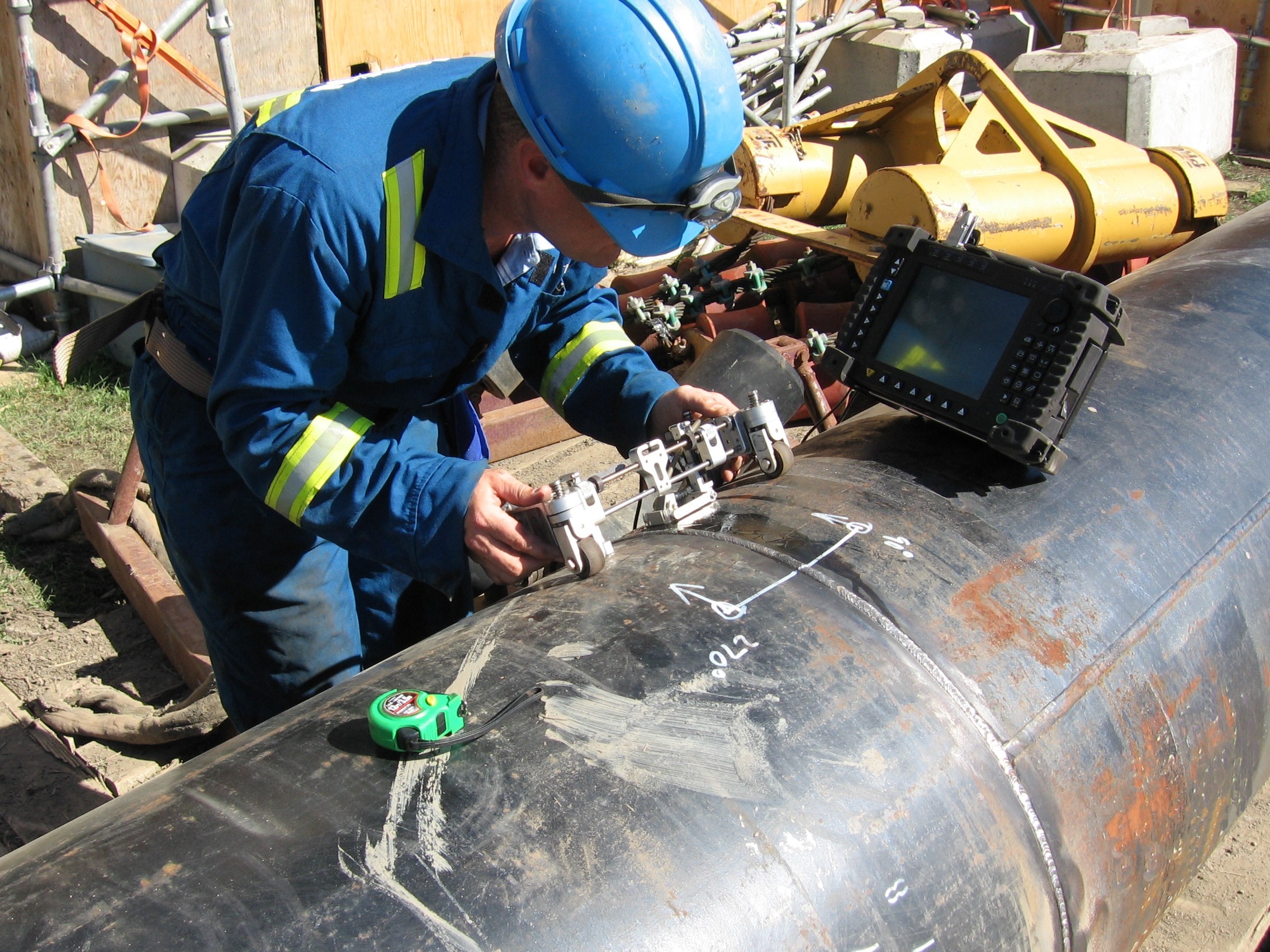
For water utilities, one of the hardest maintenance challenges is that many problems remain hidden until they become serious.
A pipe may look fine from the outside while deterioration is already developing within the wall. By the time a leak appears at the surface, the damage may already be advanced, the repair may be more disruptive, and the costs may be much higher than if the issue had been identified earlier. This is one of the reasons why the water sector is increasingly interested not only in finding leaks, but in understanding the actual condition of infrastructure before failure occurs.
This is where ultrasonic inspection becomes especially relevant.
Seeing what cannot be seen
Ultrasonic inspection is a non-destructive testing approach that uses sound waves to gather information about a material or structure. In pipeline applications, it offers the possibility of detecting defects or changes in pipe condition without cutting into the asset itself. Within the TUBERS concept, high-accuracy sensing is intended to support the detection of leaks and, importantly, the assessment of corrosion and other forms of deterioration that may not yet be visible externally. That matters because water utilities do not just need to know where a network is underperforming. They need better information about why it is underperforming, how serious the issue may be, and whether intervention is needed now or later.
In that sense, ultrasonic inspection is not simply a sensing technology. It is a tool for better infrastructure decision-making.
Why pipe condition data is so valuable
Across Europe, water networks are aging, and many utilities are trying to extend asset life while also reducing non-revenue water, limiting disruption, and using investment more efficiently. TUBERS materials describe water distribution systems as long-lived infrastructures made from a wide range of materials, each with different failure mechanisms, and emphasize that leakage and deterioration create both economic and environmental costs.
The difficulty is that traditional maintenance decisions often rely on indirect indicators: past failures, customer complaints, age-based assumptions, or risk models. These are valuable, but they do not always provide direct evidence of what is happening inside a particular pipe section. The TUBERS description notes that conventional asset-management approaches can still be problematic, especially when lifetime assumptions do not match real conditions in the field. That is why more detailed condition data can be so powerful. It gives utilities a better basis for prioritising repairs, planning renewal, and avoiding both premature replacement and costly late action.
Why ultrasound is challenging in water pipelines
Although ultrasonic inspection is promising, applying it inside water networks is not simple.
TUBERS’ technical concept highlights a core challenge: pipe inspection is a demanding environment because different materials and real-world conditions can make measurements difficult to interpret. In particular, signal attenuation and noise can reduce clarity, especially in materials such as plastic or concrete. Another issue is that conventional ultrasonic testing often depends on high excitation voltages and controlled measurement conditions, which are not always practical for long-range or embedded pipeline applications.
This is important because the water sector needs solutions that work not only in ideal laboratory setups, but in realistic infrastructure environments. The challenge, then, is not only to use ultrasound. It is to use it in a way that is robust, practical, and useful for asset managers.
From sensing to insight
What makes the TUBERS approach especially interesting is that ultrasonic inspection is not treated as an isolated feature. It is part of a broader pipeline-maintenance vision that links sensing, robotics, and decision support. The project positions high-accuracy sensing as one of the key technologies in a wider ecosystem for inspection and repair, alongside robotic platforms and data interpretation tools.
This broader context matters.
Utilities rarely benefit from raw technical data alone. What they need is information that can be turned into action: clearer evidence of defects, better visibility into pipe condition, and support for deciding whether to monitor, inspect again, repair, or replace. The TUBERS business-case material reflects this same idea, describing value not only in inspection itself, but in visual presentation to decision-makers and in supporting more holistic maintenance planning.
So the true value of ultrasonic inspection lies not just in measurement, but in how that measurement supports smarter choices.
Moving from reactive to condition-based maintenance
This is one of the biggest long-term shifts in the sector. For many years, utilities have had to make difficult decisions with incomplete information. That often leads to reactive interventions, broad replacement programmes, or conservative assumptions about pipe condition. But with more precise inspection technologies, the sector has an opportunity to move further toward condition-based maintenance. That means making decisions based less on estimates alone and more on evidence gathered from the asset itself.
TUBERS’ objectives reflect this direction by linking advanced sensing with the wider goal of improving inspection and maintenance planning. The project also frames the overall opportunity in terms of reducing water loss, lowering energy use, and helping utilities manage infrastructure more intelligently.
Why this matters beyond technology
Ultrasonic inspection may sound like a highly technical topic, but its importance is ultimately very practical.
For utilities, better internal inspection can mean:
- earlier awareness of deterioration
- more targeted maintenance decisions
- reduced uncertainty around pipe condition
- more efficient use of investment budgets
- stronger long-term resilience of critical infrastructure
In other words, this is not just about better equipment. It is about building a more informed maintenance strategy.
That is also why inspection technologies are increasingly relevant to wider sustainability goals. When utilities can manage assets more effectively, they have a better chance of reducing water losses, avoiding unnecessary interventions, and improving the environmental performance of their networks over time. TUBERS’ wider project framing explicitly links improved inspection and repair to reductions in wasted water, energy use, and emissions.
Looking ahead
The future of pipeline maintenance will depend on better visibility into what is happening inside essential infrastructure.
Ultrasonic inspection is one of the technologies helping to make that possible. Not because it replaces every other method, but because it can add a deeper layer of understanding, one that helps utilities act earlier, plan better, and manage uncertainty with greater confidence.
For TUBERS, that makes ultrasonic inspection an important part of a larger ambition: enabling smarter, more targeted, and less disruptive ways of maintaining drinking water networks. And in a sector where so much depends on what cannot easily be seen, that kind of visibility could make all the difference.
Ultrasonic inspection could help water utilities understand pipe conditions before failures happen. As the sector moves toward more informed and less disruptive maintenance strategies, advanced sensing is becoming an increasingly important part of the picture.