
Athens, Greece — July 2026
The TUBERS consortium gathered in Athens for the project’s final workshop and face-to-face project meeting, marking an important milestone in the final phase of the Horizon Europe project. Hosted at the Athens test site, the meeting brought together project partners to review the results of the final demonstration activities, consolidate technical and reporting evidence, and define the remaining steps towards the project’s closure in August 2026.
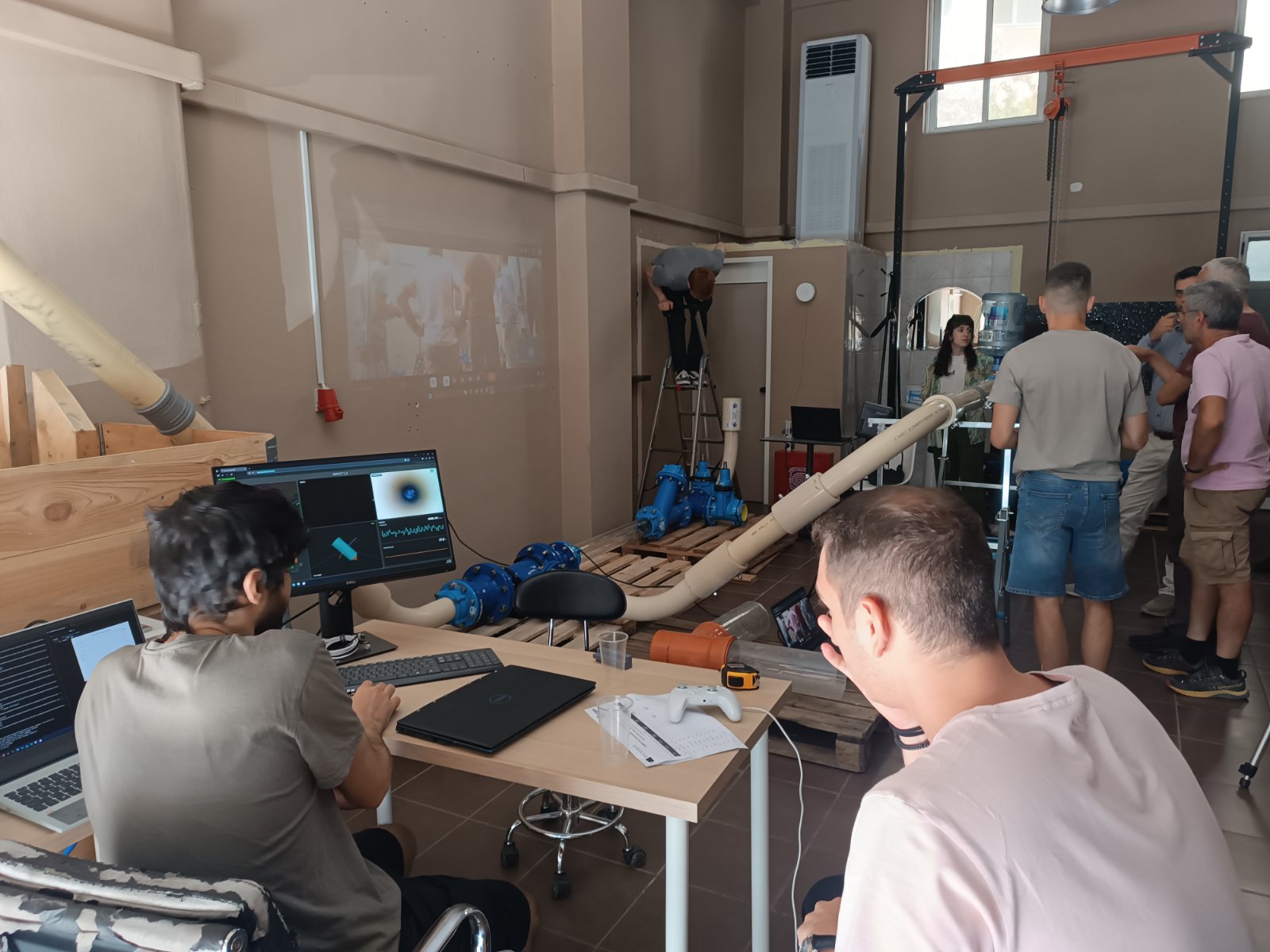
The Athens workshop focused on the most mature and viable outcomes of the project, following the consortium’s strategic decision to concentrate the final months on demonstrable results, practical evidence, and exploitable components. This approach allowed partners to present a clear and realistic story of what TUBERS has achieved, what was learned, and how the project’s results can continue to create value beyond the end of the funded period.
During the final workshop, partners demonstrated the TUBERS inspection and repair workflow, connecting several key elements of the project into one operational storyline: inspection evidence, defect identification, task creation, operator interface, repair-mode operation, pressure check, and evidence upload. This was an important success for the project, as it showed how individual technical components can support a broader inspection-to-repair process for future water infrastructure applications.
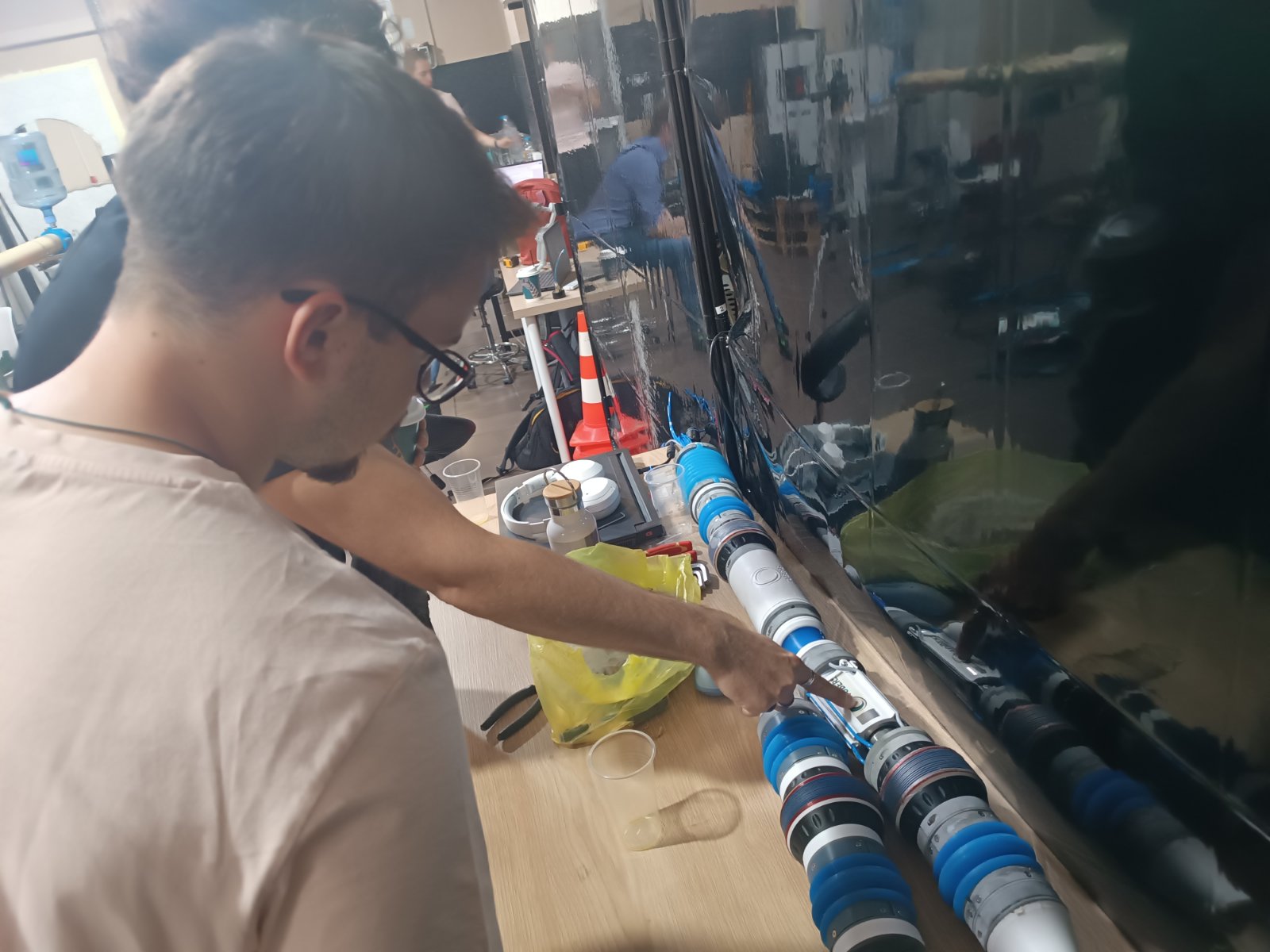
A key highlight of the workshop was the live wet repair proof-of-concept. The consortium tested a tape-based internal repair approach in a pipe setup with water present. The repair element remained in place during the test, and the isolated chamber was brought to approximately 0.5 bar with no visible leakage observed. While further development and validation are still needed before any commercial deployment, this result provided valuable evidence that the TUBERS repair concept can support future targeted, less disruptive maintenance strategies.
The workshop also showcased progress in soft robotic movement inside pipe structures, anchoring and navigation in a test setup, cloud-connected task creation, and operator-guided decision workflows. The consortium also reviewed lessons from ultrasonic inspection integration and the practical challenges of deploying sensing and repair tools on a compliant robotic carrier. These lessons are particularly valuable for the final review, as they demonstrate both technical progress and transparent understanding of remaining limitations.
Beyond the technical demonstrations, the Athens meeting highlighted the strengthened role of end-user feedback in the final phase of the project. Throughout the last months, the consortium intensified its engagement with water utilities, industrial maintenance stakeholders, and alternative end-user groups. Their input helped refine the project narrative around the most relevant and exploitable outcomes: inspection support, decision-making evidence, reduced disruption, targeted intervention, and future standalone or modular routes for the developed technologies.
The face-to-face project meeting that followed the workshop focused on the final consolidation of project outputs. Partners reviewed remaining deliverables, datasets, Zenodo uploads, dissemination evidence, exploitation planning, risk closure, final reporting requirements, and open action items. The meeting also provided an opportunity to align the consortium around the final review strategy and ensure that each work package contributes clear evidence of progress, impact, and lessons learned.
The final Athens activities demonstrated the resilience and adaptability of the consortium. Even where technical challenges required strategic adjustments, TUBERS succeeded in generating valuable demonstrators, operational learning, dissemination outputs, stakeholder feedback, and exploitation pathways. The project’s final phase has strengthened the focus on viable results and future impact, including links with water utilities, industrial pipeline maintenance actors, soft robotics applications, ultrasonic inspection, and decision-support workflows.
The consortium will now work towards completing the final reporting period, including the final technical report, financial reporting, remaining deliverables, open-access datasets, dissemination material, and review presentation package. The Athens meeting confirmed that TUBERS enters its final stage with a stronger evidence base, a clearer exploitation narrative, and a shared commitment to making the project’s results useful beyond the project lifetime.